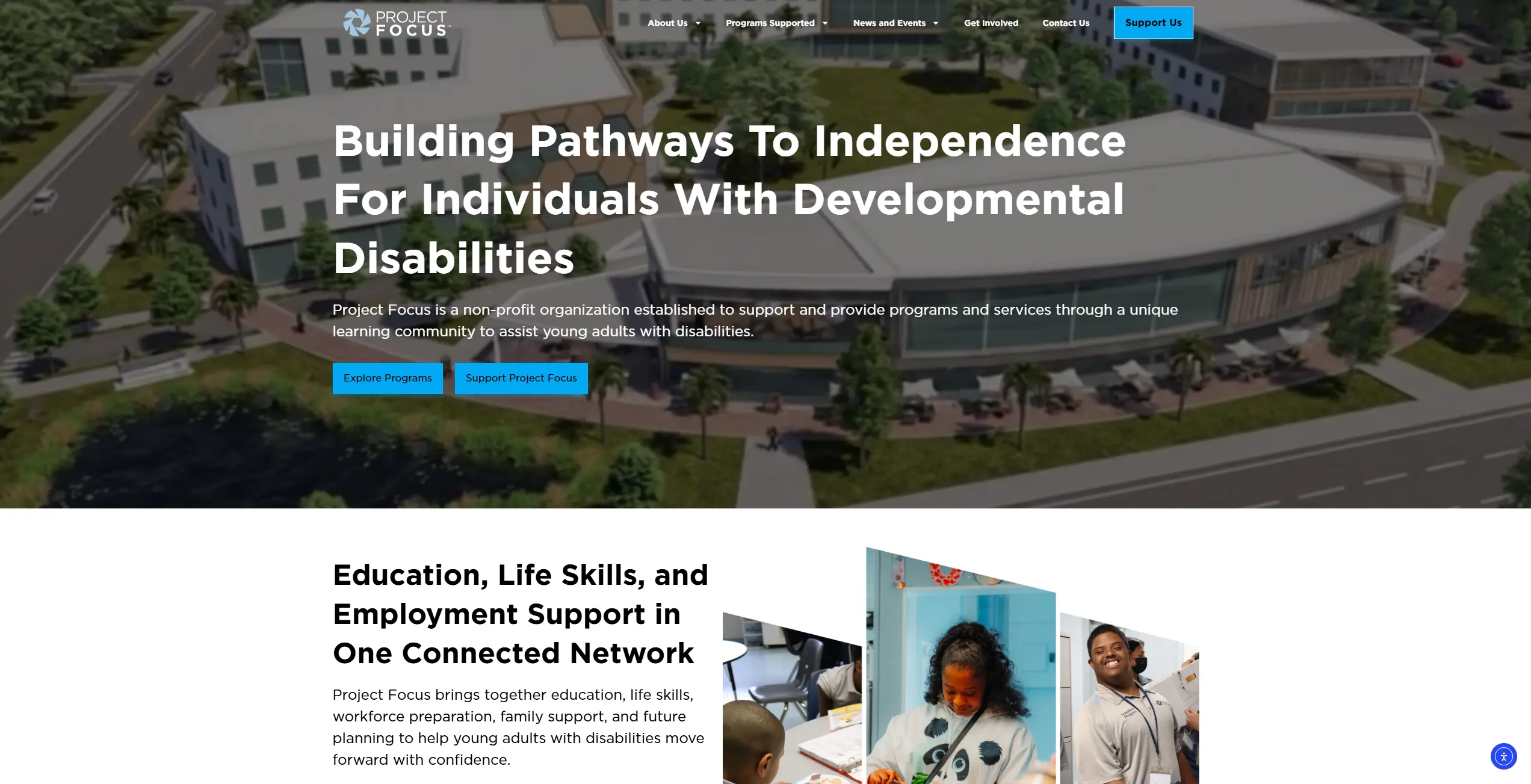
A systematic WordPress implementation for a nonprofit with several connected programs. Project Focus Foundation brings education, life skills, employment preparation and community participation together to support individuals with developmental disabilities. In 2026, I worked on the website build with HCP Associates Inc., using custom post types (CPTs), Advanced Custom Fields (ACF), Figma and custom CSS.
Client: Project Focus Foundation
Partner: HCP Associates Inc.
Year: 2026
My role: WordPress implementation and structured content engineering
Technology: WordPress, CPTs, ACF, Figma and CSS
Live website: projectfocusfoundation.org ↗
The problem: multiple initiatives, one connected mission
Project Focus is more than a single program. Its public information spans education, transitions into adult life, workforce readiness, community participation and future initiatives. Families, supporters, partners and other visitors arrive with different needs; the website has to let each audience find the relevant path.
That variety creates a content-management challenge. Recurring program information and updates need a reliable structure so the organization can grow the site without repeatedly rebuilding pages or duplicating the same design patterns.
How I approached the website
1. Implementing the Figma design direction
I translated the Figma direction into an implemented WordPress website, maintaining a consistent visual language across the different content areas. Custom CSS handled design and presentation details where the layout called for more targeted control.
2. Building a systematic CPT and ACF foundation
This project went beyond a set of individual landing pages. I used custom post types and Advanced Custom Fields to support a structured content approach. The goal was to keep recurring information organized as data and separate from the visual presentation wherever appropriate.
A reusable content model helps editors maintain similar entries more consistently and supports repeatable layouts without recreating the same structure from scratch. This is the core engineering distinction between this build and my smaller Elementor-only client sites.
3. Organizing the program experience
The public website introduces Project Focus’s connected work across education, life skills, workforce preparation and community-based opportunities. Visitors can explore program information before moving to the next relevant action.
4. Supporting updates and participation
The site also surfaces news and events, donation paths, campus-visit information and ways for people to get involved. These features make the website useful for returning visitors, families and supporters—not just for first-time introductions.
5. Responsive presentation and component consistency
The implementation needed to carry the same page hierarchy, content relationships and interaction cues across different screen sizes. I used the WordPress structure and CSS presentation rules to keep that experience consistent.
What made this build different
The technical emphasis was structured content rather than one-off page assembly. CPTs and ACF let the website treat recurring content as maintainable entries, while Figma and custom CSS supplied the intended frontend experience.
HCP Associates Inc. was the wider project partner. Its longstanding strategic, branding, communications and community work for Project Focus is distinct from the WordPress engineering scope documented here.
Outcome and boundaries
The published site connects Project Focus’s programs, stories, events and participation options within one website experience. My contribution focused on the technical and visual implementation and its structured WordPress content foundation.
This case study records the architecture and website features. It does not imply that I created the nonprofit’s programs, delivered HCP’s broader strategic services, or independently produced fundraising and enrollment results.