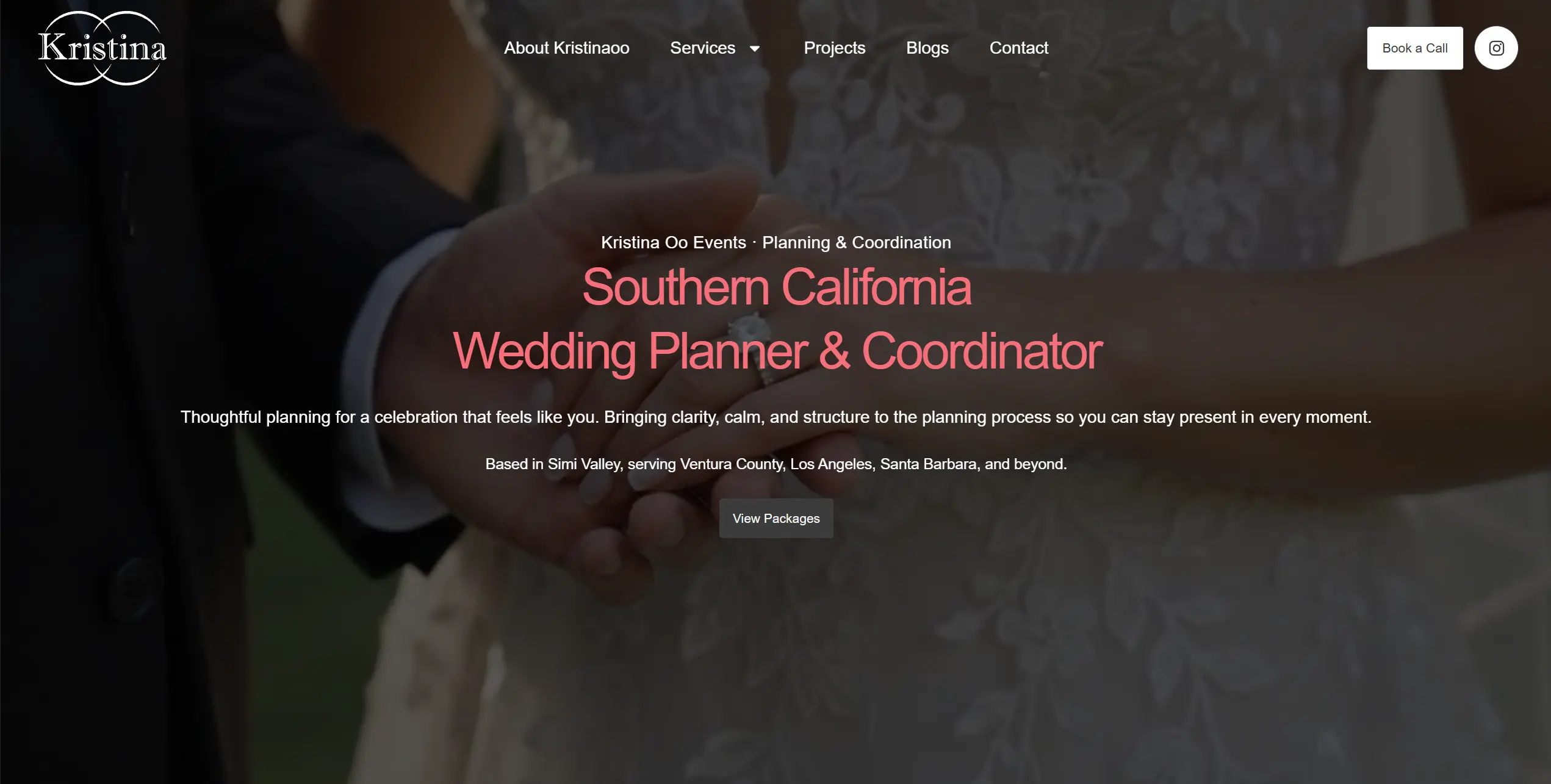
A wedding-planning website built around clarity, trust, and the next step. Kristina Oo provides wedding planning and coordination across Southern California. The website introduces her approach, distinguishes between levels of planning support, and helps couples explore services before making an inquiry.
Client: Kristina Oo
Website: kristinaoo.com ↗
Focus: WordPress website implementation, service presentation, and visitor journeys
Technology: WordPress and Elementor
The challenge: make wedding-planning options understandable
Not every couple needs the same kind of support. Someone who has handled the major decisions may be looking for wedding-day coordination; another couple needs guidance on vendors and logistics, while others want a planner involved from the beginning. A useful website needs to make those differences understandable without overwhelming visitors.
The website also needed to communicate the person behind the service. Wedding planning is a relationship-led business: couples are choosing a professional they will trust with an important occasion. The content therefore needs to combine practical answers with Kristina’s experience and approach.
A service-first website structure
The central service experience gives Coordination, Partial Planning, and Full Planning clearly differentiated places. Visitors can compare what each level covers, understand the amount of ongoing support involved, and move toward an inquiry or consultation.
Dedicated service information expands on the packages rather than forcing everything onto a single landing section. The site also presents additional ways to work with Kristina, including focused consultations and ceremony support.
What the website brings together
1. A clear introduction and service paths
The homepage establishes who Kristina serves—couples planning weddings in Southern California—and introduces her planning philosophy. Service sections then provide direct routes to the right level of support.
2. About and portfolio content that builds trust
An About page connects Kristina’s professional experience with her hospitality background and personal approach to weddings. The portfolio gives prospective clients another way to understand the style and character of the celebrations she works on.
3. Practical information before the first conversation
Frequently asked questions explain how the service levels differ, what communication looks like, and how planning and coordination work. Clear inquiry and consultation calls to action help visitors move from browsing into a conversation.
4. A place for ongoing educational content
The website includes a wedding-planning journal with practical articles. This adds depth beyond the main service pages and gives visitors useful information while they are evaluating planning options.
Implementation and presentation
The WordPress and Elementor implementation brings the service content, supporting pages, and editorial material into a consistent website experience. The responsive presentation keeps the core planning information and inquiry paths available across desktop and smaller screens.
The design and content priorities are straightforward: lead with the planner’s identity, make the available services easy to distinguish, use real event imagery, and keep the route to contacting Kristina clear.
The result: a website that helps couples choose their next step
The live website brings together service descriptions, personal introduction, portfolio content, FAQs, and wedding-planning articles. Visitors can understand the available levels of support and find an appropriate route to inquire.
This case study documents the website experience and its visible features. It does not claim conversion improvements, booking growth, or search-performance results without verified data.